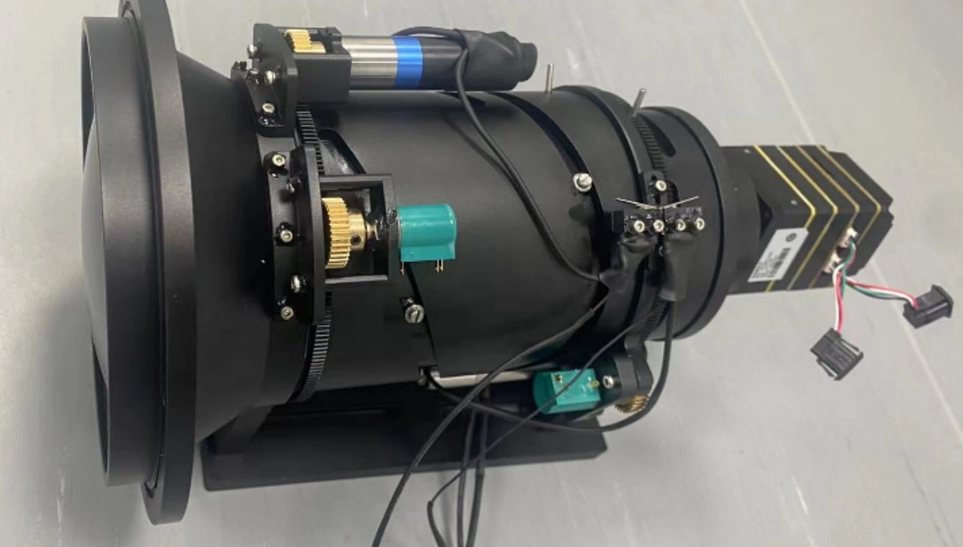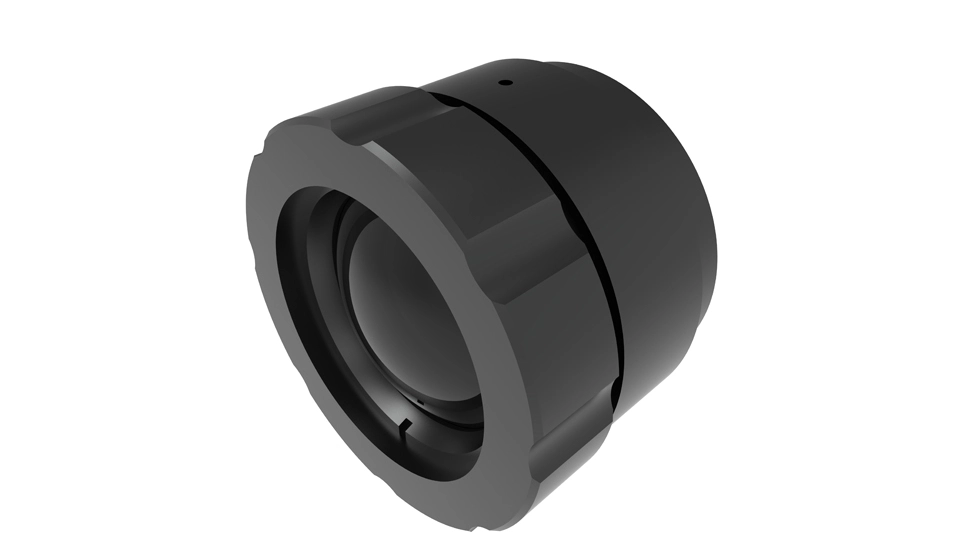
Quality in night vision headgear is determined by much more than image brightness or nominal resolution. Buyers should examine optical consistency, image quality, manufacturing tolerances, mounting stability, environmental protection, electronic reliability, calibration, and supplier quality control. These factors determine whether a product can maintain consistent performance across units and over extended use.
Image quality should be evaluated using several parameters rather than a single specification. Resolution, signal-to-noise ratio, image uniformity, sensitivity, field of view, distortion, and brightness control all influence what the user actually sees.
Resolution indicates the system's ability to distinguish fine details, but high resolution is not necessarily useful if image noise is excessive. Similarly, a bright image is not automatically a high-quality image if contrast and fine detail are poor.
Buyers should request standardized test conditions wherever possible so that competing products can be compared fairly.
Two products with the same nominal specifications can perform differently if manufacturing tolerances are not tightly controlled. Optical alignment, lens centering, component positioning, electronic calibration, and mechanical assembly all affect the final system.
For commercial buyers purchasing multiple units, consistency between samples can be more important than the performance of one exceptional unit. A reliable production process should therefore minimize variation from one product to another.
This is one reason it is useful to work with an experienced supplier when evaluating night vision headgear for OEM, project, or batch requirements.
Optical alignment must remain within the design tolerances of the system. Misalignment can reduce sharpness, shift the image, change the field of view, or create inconsistencies between binocular channels.
The issue becomes even more important in head-mounted equipment because the device is frequently mounted, removed, adjusted, and repositioned. The mechanical structure must maintain the optical relationship between the objective lens, imaging core, and eyepiece.
Quality inspection should therefore include checks of optical alignment rather than focusing exclusively on external appearance.
Night vision headgear intended for outdoor use should be evaluated for resistance to dust, moisture, temperature changes, and mechanical impacts. The appropriate protection level depends on the intended operating environment.
Sealing quality is particularly important because moisture and dust can affect optical surfaces, electronics, and mechanical components. A protection rating such as IP67, when applicable to the complete product configuration, provides useful information about environmental resistance, but buyers should confirm exactly what the manufacturer's test covers.
A high-quality optical system can still perform poorly if the mounting mechanism allows excessive movement. Head-mounted products require stable positioning because even small shifts in the optical axis can affect the user's viewing experience.
The mounting interface should be evaluated for mechanical rigidity, adjustment range, locking behavior, repeatability, and compatibility with the intended headgear or helmet configuration.
For systems incorporating a night vision goggles manufacturer, buyers should also ask how mounting components are inspected and whether mechanical tolerances are controlled during production.
Reliability depends on component quality, assembly processes, environmental design, electrical protection, and quality-control procedures. A supplier should be able to explain how incoming materials are inspected, how critical assemblies are tested, and how finished products are verified before shipment.
For larger projects, buyers can request information about production traceability, inspection records, sampling procedures, and corrective-action processes. These details provide a better indication of manufacturing maturity than marketing claims alone.
Calibration helps ensure that different components and optical channels work within the expected performance range. It can address variations in image brightness, uniformity, alignment, and electronic response.
For binocular head-mounted products, consistency between the left and right viewing channels is especially important. Significant differences in brightness or image characteristics can reduce viewing comfort even when both channels individually meet their basic specifications.
Weight is not simply an ergonomic consideration. It influences how the device interacts with the mounting system and how comfortable it is during extended wear.
A heavier optical assembly can increase mechanical loading on the mount and create a less balanced configuration. Designers therefore need to consider the relationship between optical performance, housing construction, battery configuration, and mounting structure.
For applications requiring compact equipment, component integration and material selection can help reduce unnecessary weight without sacrificing mechanical stability.
Some users require head-mounted equipment that can accommodate or integrate thermal imaging components. In these cases, compatibility between the optical system and mounting architecture becomes an additional quality factor.
A thermal monocular head mount configuration, for example, needs sufficient structural stability to support the optical assembly while maintaining its intended viewing position. Buyers should check the mounting interface, adjustment mechanism, center of gravity, and compatibility with the complete equipment configuration rather than judging the mount by appearance alone.
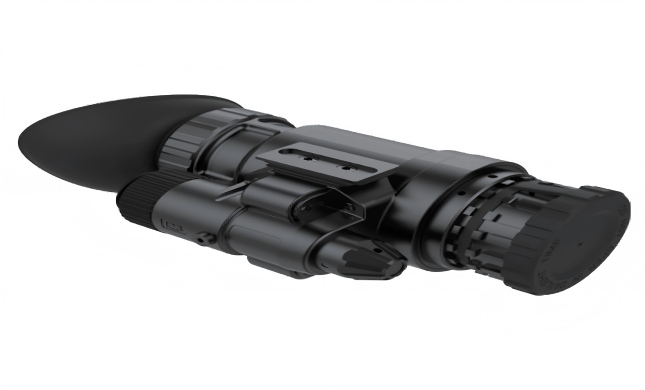
A supplier's manufacturing process should include inspection at several stages rather than relying solely on final visual inspection. Incoming optical components, mechanical parts, electronic assemblies, and imaging cores can each require different inspection methods.
Final testing may include optical performance verification, electronic function testing, environmental checks, mechanical inspection, and image-quality assessment. For customized products, the supplier should also demonstrate that the production process can consistently reproduce the approved reference sample.
Professional buyers should request a complete technical package that may include product specifications, dimensional drawings, interface definitions, operating-temperature information, mounting details, optical parameters, testing conditions, and quality-control documentation.
For customized or OEM projects, additional documentation may include sample approval procedures, inspection standards, change-control processes, packaging requirements, and production lead-time information.
Clear documentation reduces ambiguity between the buyer and manufacturer and makes future quality verification easier.
The most effective comparison method is to create a specification matrix and evaluate each supplier against the same criteria. Important categories include image quality, optical performance, mechanical construction, mounting stability, environmental protection, power requirements, product consistency, customization capability, and after-sales support.
Buyers should also distinguish between measured specifications and descriptive marketing terms. A statement such as “high-definition night vision” is difficult to compare unless it is supported by measurable parameters and defined testing conditions.
Evaluating night vision headgear properly requires a manufacturing and system-level perspective. Optical performance, mechanical stability, environmental protection, calibration, weight, and production consistency all contribute to the quality of the finished product.
For buyers, the strongest supplier is not necessarily the one offering the most impressive individual specification. A dependable manufacturer should be able to demonstrate consistent production, controlled assembly processes, clear technical documentation, and repeatable product performance. These factors provide a much stronger foundation for long-term procurement and system integration.
 Call us on:
  Email Us:
  No.9 Zhongxing East Road, Lishui Economic Development Zone, Nanjing, Jiangsu, China
  en
en