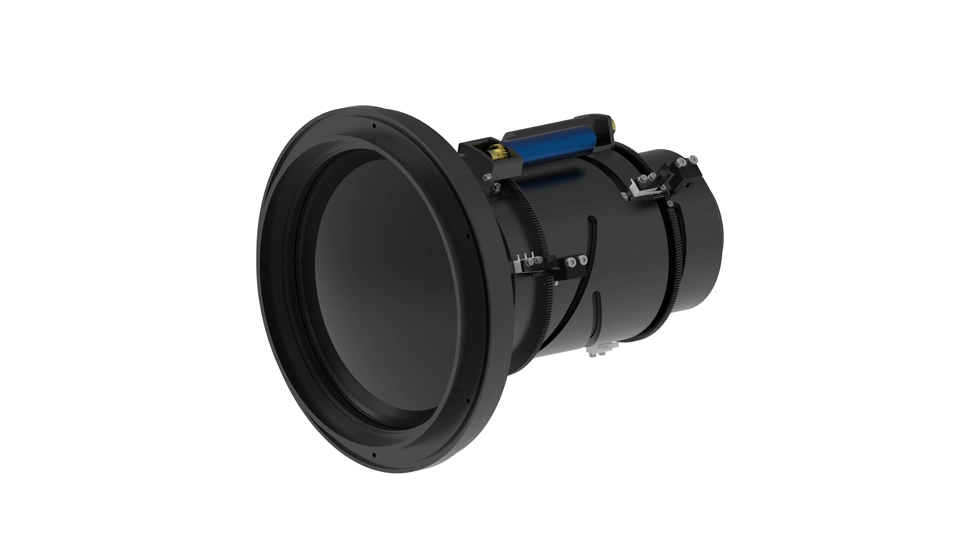
In modern imaging systems, understanding FOV lenses (Field of View lenses) is crucial for achieving precise, efficient, and high-performance visual results. Whether in machine vision, industrial inspection, or security surveillance, the camera lens field of view directly determines the scene range that can be captured and the precision of detail resolution.
This article will comprehensively introduce the FOV optics you need to know, including dual field of view lenses, practical application scenarios, and how to choose the field of view lens that best suits your needs.
The field of view refers to the total observable area that a camera or optical system can capture at a given moment.
Therefore, an FOV lens is an optical lens specifically used to control and optimize this visual range. Specifically:
Wide-angle FOV lenses can capture larger scenes but with less detail of individual objects
Narrow field of view lenses focus on smaller areas but provide clearer details
The size of the field of view mainly depends on the following factors:
| Factor | Impact on FOV |
|---|---|
| Focal Length | Shorter focal length → Larger field of view |
| Sensor Size | Larger sensor → Larger field of view |
| Working Distance | Closer distance → Smaller visible range |
This relationship is crucial in the design of camera lens field of view range, especially in industrial and machine vision systems.
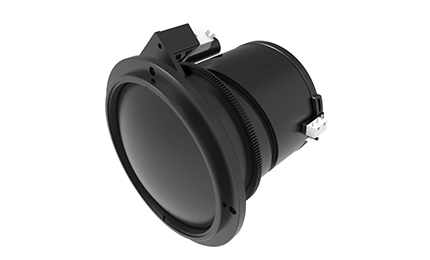
In industrial environments, FOV optical systems play a key balancing role between "coverage" and "resolution".
Electronics inspection (PCB, circuit boards, semiconductors)
Automotive parts measurement
Packaging and label inspection
Wide field of view lenses are suitable for large area scanning, while narrow field of view lenses are used for fine defect detection.
Robots rely on field of view lenses to achieve:
Target recognition
Environmental navigation
Grabbing and placing operations
Dual field of view systems can achieve:
Wide range surveillance
Target magnification tracking
Microscopic imaging systems
Medical diagnostic equipment
Laboratory automation
These applications typically require a combination of high precision and flexible viewing angles.
Choosing the right FOV lens is not just about simply choosing "wide-angle" or "narrow-angle", but a comprehensive system-level evaluation process.
1. Clarify Field of View Needs
What range needs to be captured?
What level of detail accuracy is required?
2. Calculate FOV Based on Distance
Determine the required lens parameters by combining working distance and sensor size.
3. Balance Resolution and Coverage
Larger field of view → Lower pixel density
Smaller field of view → Higher precision
4. Consider Dual Field of View Solutions
If the application requires both large area scanning and fine detection, dual field of view lenses are often the best choice.
5. Evaluate Environmental Conditions
Temperature
Dust or vibration
Lighting conditions
The "ideal" FOV depends on the specific application. For large area inspection, a larger field of view is usually chosen; for high precision tasks, a smaller field of view is necessary to improve resolution. In many cases, combining both with dual field of view lenses can achieve optimal results.
FOV refers to the actual observable area, while the Angle of View is the angular range of that area (usually measured in degrees). In practical applications, these two concepts are closely related and can sometimes be used interchangeably in the optical field.
The best FOV lens depends on the size of the object being inspected, the required resolution, and inspection speed. For systems requiring flexibility and high efficiency, dual field of view lenses are often the ideal choice because they can achieve wide area scanning and fine detection without changing hardware.
FOV lenses are core components in modern imaging systems. From basic camera field of view control to advanced dual field of view optical systems, these lenses directly impact system performance, precision, and efficiency.
For industries that require both flexibility and high precision, CNGEIR's dual field of view lenses offer a powerful solution—achieving both wide coverage and high-detail imaging in one system.
 Call us on:
  Email Us:
  No.9 Zhongxing East Road, Lishui Economic Development Zone, Nanjing, Jiangsu, China
  en
en