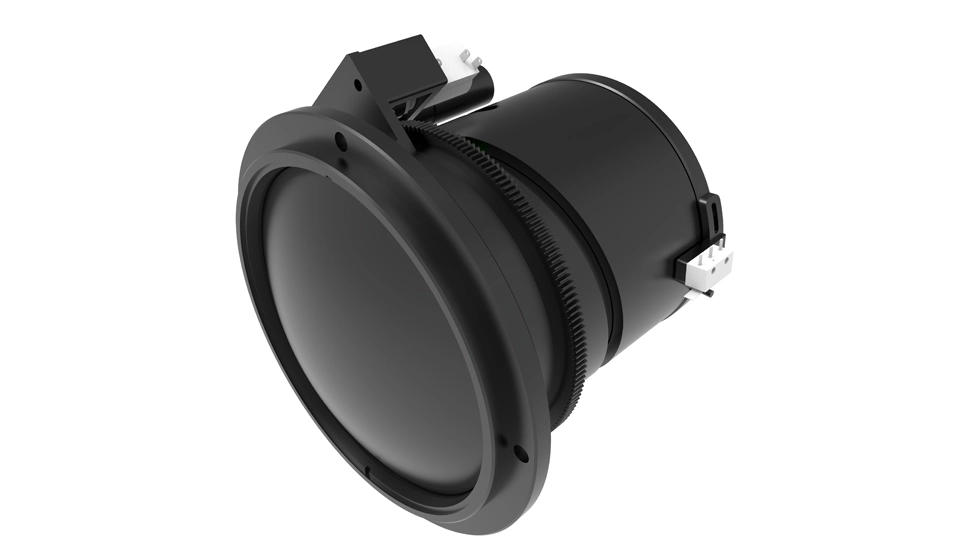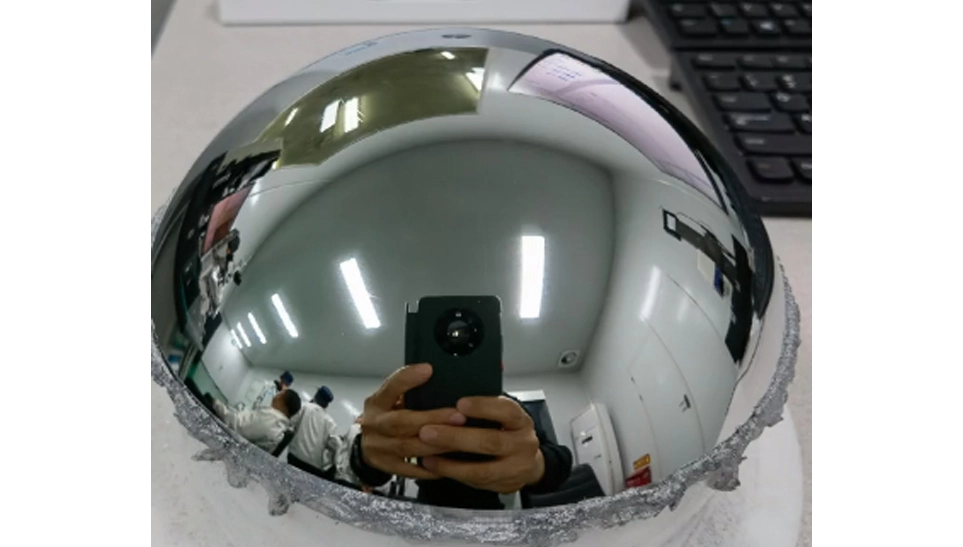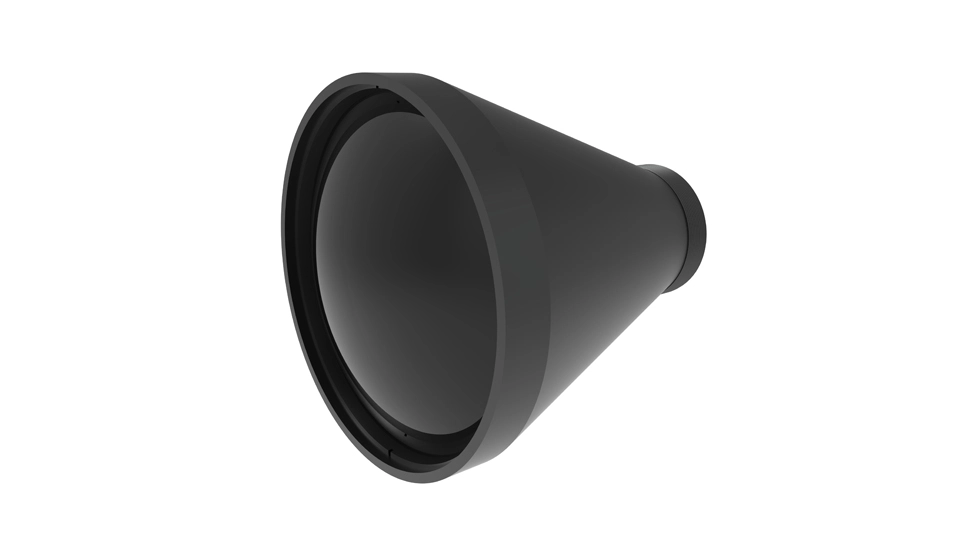
A silicon aspheric lens is a specialized infrared optical component designed to deliver high-precision focusing and imaging performance in demanding environments such as thermal imaging, industrial sensing, and defense systems. Unlike conventional spherical optics, an aspheric lens corrects optical aberrations more effectively, enabling sharper imaging, higher transmission efficiency, and compact system design.
In recent years, demand for infrared aspheric lenses has increased significantly due to the rapid expansion of IR applications in automation, aerospace, medical diagnostics, and AI-based vision systems. Silicon, as a material, stands out because of its excellent transmission in the mid-wave infrared (MWIR) range, mechanical strength, and thermal stability.
A silicon aspheric lens is an optical lens made from high-purity silicon material with a non-spherical surface profile. The aspheric geometry is engineered to reduce spherical aberration and improve focusing accuracy.
Silicon is particularly suitable for infrared applications because it has strong transmission in the wavelength range of approximately 1.2 μm to 7 μm, making it ideal for MWIR systems.
These lenses are widely used in:
Thermal imaging cameras
Infrared spectroscopy systems
Military targeting systems
Gas detection sensors
Industrial automation vision systems
According to the product specifications from CNGEIR’s silicon infrared aspheric lens line, these lenses are designed for high precision IR optical systems requiring stable performance in harsh environments.
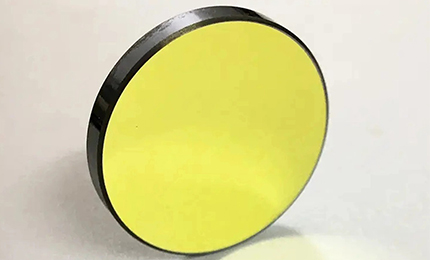
The main difference between spherical and aspheric lenses lies in how light is focused.
In spherical lenses, light rays passing through the edges focus at different points than those near the center, resulting in blur and distortion.
Aspheric surfaces solve this problem by using a carefully optimized curvature that ensures all incoming rays converge at a single focal point.
Silicon has:
High refractive index (~3.4 in IR range)
Excellent thermal conductivity
Strong transmission in MWIR spectrum
Low dispersion in infrared wavelengths
These properties make silicon ideal for high-performance infrared aspheric lenses where stability and clarity are critical.
Silicon competes with materials such as germanium, zinc selenide (ZnSe), and chalcogenide glass. However, it offers a unique combination of performance and cost efficiency.
Lightweight Design
Silicon is significantly lighter than germanium, making it suitable for portable IR devices.
High Thermal Stability
Maintains optical performance under temperature fluctuations.
Improved System Integration
Ideal for compact optical systems where size and weight matter.
Cost-Effective Production
Compared to germanium, silicon offers better scalability in manufacturing.
Enhanced Image Quality
Aspheric design significantly reduces distortion and improves resolution.
Aspheric lenses reduce spherical aberration, allowing light rays to converge at a single focal point, improving sharpness and reducing distortion.
Silicon lenses are typically suitable for the 1.2 μm to 7 μm infrared range, covering most MWIR applications such as thermal imaging and gas detection.
Silicon aspheric lenses are most commonly used in defense and military systems, industrial thermal inspection, automotive night vision, aerospace infrared imaging, and scientific instrumentation. These industries rely on their high-performance infrared optical capabilities for accurate sensing and imaging in demanding environments.
The silicon aspheric lens is a critical component in modern infrared optical systems. Its combination of high IR transmission, mechanical strength, and aspheric precision makes it indispensable in industries requiring high-performance imaging.
With increasing demand for advanced sensing technologies, silicon-based infrared aspheric lenses are expected to play a key role in future optical innovation. Aspheric lens manufacturers like CNGEIR continue to advance this field by offering customized, high-quality solutions tailored to industrial and scientific needs.
 Call us on:
  Email Us:
  No.9 Zhongxing East Road, Lishui Economic Development Zone, Nanjing, Jiangsu, China
  en
en