In modern optical engineering, aspheric lenses have become the core component of high-performance imaging systems. From infrared optics and thermal imaging to high-end cameras and research equipment, aspheric lenses can provide superior image quality, more compact structures, and higher optical efficiency.
This article will comprehensively analyze aspheric lenses, including their definition, advantages, manufacturing processes, application areas, and how to choose a reliable aspheric lens manufacturer (such as CNGEIR).
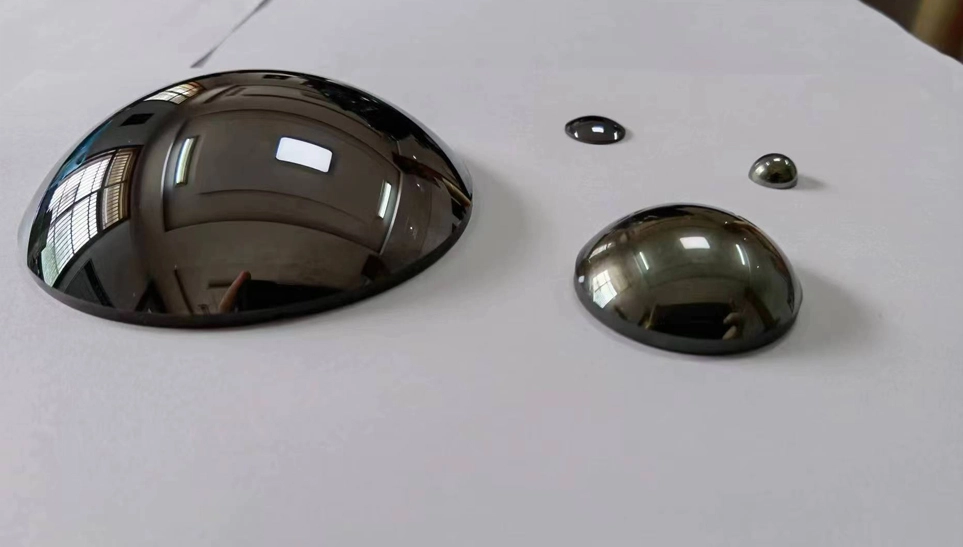
An aspheric lens is an optical lens whose surface curvature does not follow a simple spherical shape. Unlike traditional spherical lenses, the curvature of an aspheric lens gradually changes from the center to the edge.
This unique structure allows it to:
Reduce spherical aberration
Improve imaging clarity
Enhance optical efficiency
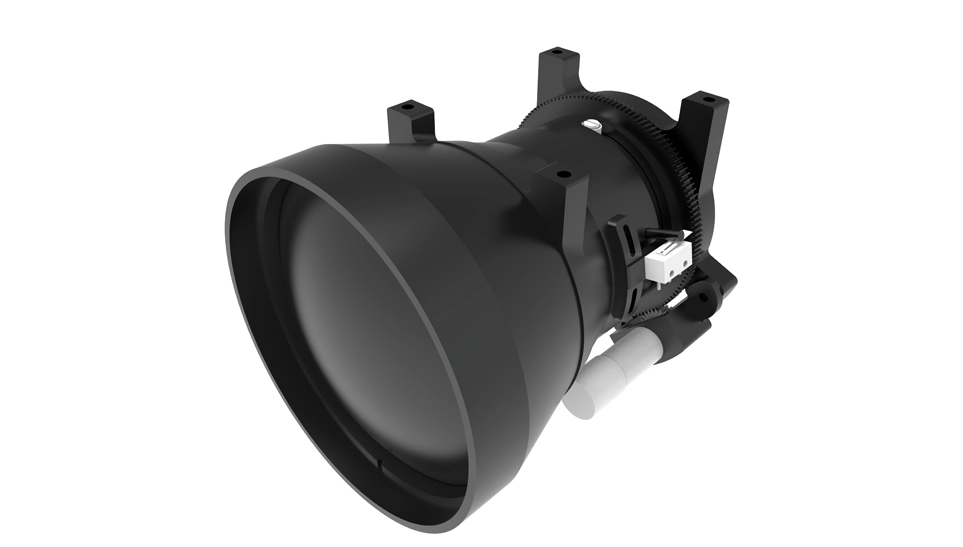
Especially infrared aspheric optical lenses, specifically used to regulate light in the infrared band (0.7–1000 μm), are widely used in thermal imaging and night vision systems.
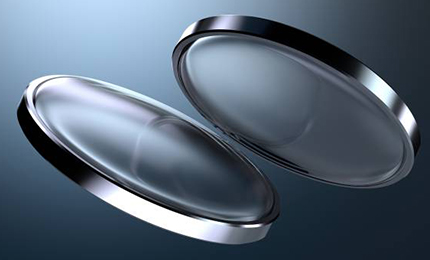
Understanding the differences between aspheric and spherical lenses is crucial for selecting the appropriate optical solution.
| Characteristic | Aspheric Lens | Spherical Lens |
|---|---|---|
| Surface Shape | Non-uniform complex curvature | Simple constant curvature |
| Optical Aberration | Minimal | Larger (especially noticeable spherical aberration) |
| Imaging Quality | Clear across full field | Edge clarity decreases |
| Number of Lenses | Fewer | Typically requires multiple lenses |
| System Volume | More compact | Bulkier |
Key Conclusion:
Aspheric lenses can often replace multiple spherical lenses, thus simplifying system structure and reducing weight and cost.
Aspheric lenses can effectively reduce spherical aberration, achieving clearer and higher contrast images, especially excelling in edge areas.
Due to the reduced number of required lenses, the entire optical system can be designed to be lighter, smaller, and more efficient.
Infrared aspheric lenses perform excellently in low or no light environments, being a key component of night vision and thermal imaging equipment.
Optimized curvature design allows for consistent focus across the entire field of view.
Modern precision molding technology allows for high consistency and low cost in mass production of aspheric lenses.
Custom aspheric lens manufacturing requires advanced precision machining technology, primarily including the following steps:
Common materials include:
Germanium (Ge) — High refractive index, suitable for infrared
Silicon (Si) — Suitable for mid and far-infrared bands
ZnSe, ZnS — High infrared transmittance
Chalcogenide glass — Optimized for thermal imaging
Suitable for mass production
High consistency
Low cost
High precision processing
Suitable for complex or large lenses
Ultra-precision processing
Commonly used in infrared optics
Anti-reflective coating
Infrared transmittance optimization
Surface roughness control (high-end products Ra ≤ 0.04 μm)
Strict tolerances ensure stable performance:
Surface accuracy can reach λ/20
Diameter tolerance ±0.05 mm
Eccentricity ≤ 1′
Aspheric lenses are widely used in multiple industries:
Thermal imagers
Night vision devices
Security monitoring
Smartphone cameras
VR/AR devices
Digital cameras
Spectrometers
Laser collimation systems
Optical sensors
Non-invasive testing
Infrared scanning devices
Target recognition systems
Remote sensing technology
Guidance systems
Aspheric lenses reduce spherical aberration across the entire lens surface, allowing edge rays to focus accurately, thereby enhancing peripheral vision clarity and reducing distortion.
Yes. Aspheric lenses are widely used in eyeglass lenses, offering advantages of being thinner, more aesthetically pleasing, and providing a clearer visual experience.
In photography, aspheric lenses can:
Improve overall image clarity
Reduce distortion and aberrations
Achieve more compact lens designs
Resulting in higher quality image effects.
Aspheric lenses are redefining modern optical systems, enabling higher performance, smaller size, and greater design flexibility. Whether in infrared imaging, consumer electronics, or research fields, aspheric lenses play an irreplaceable role.
For companies needing custom aspheric lenses, collaborating with an experienced aspheric lens manufacturer—CNGEIR—will help achieve optimal performance and long-term reliability.
 Call us on:
  Email Us:
  No.9 Zhongxing East Road, Lishui Economic Development Zone, Nanjing, Jiangsu, China
  en
en