For modern tactical units, the ability to detect, identify, and track targets under unpredictable lighting and weather conditions is no longer a luxury—it is a mission requirement. Over the past decade, thermal imaging technology has transformed battlefield awareness, yet not all thermal systems are created equal. Today, light weight uncooled thermal sights are emerging as the new benchmark for tactical performance, offering a practical balance of durability, mobility, and imaging clarity.
As a manufacturer dedicated to advanced optoelectronic solutions, CNGEIR has seen this shift firsthand through the demands of military, law-enforcement, and security customers. This article explores why these compact uncooled systems are rapidly replacing heavier or cooled counterparts, and how they reshape tactical operations in the field.
Weight has always been a critical factor in field operations. Traditional thermal weapon sights—especially cooled systems—often come with the disadvantages of large footprints, higher power requirements, and cumbersome integration with weapon platforms.
Light weight uncooled thermal sights solve this engineering challenge by relying on microbolometer detectors instead of cryogenic cooling. Without the need for a cooling module, the design becomes significantly lighter and simpler. For operators who already carry ballistic protection, ammunition, communication gear, and mission-specific tools, reducing sight weight by even a few hundred grams can dramatically improve endurance and response time.
In operations that involve rapid movement, changing positions, or extended patrols, mobility is directly tied to survivability. Lightweight systems allow operators to transition from day to night or from close-quarters to medium-range engagement without sacrificing speed or maneuverability.
Cooled thermal systems, although known for their sensitivity, depend on delicate components that require strict temperature control. This increases the risk of failure during long missions or in extreme climates.
Uncooled technology eliminates this vulnerability. Light weight uncooled thermal sights use VOx or a-Si microbolometer sensors that remain stable across a wide temperature spectrum. For field operators, this means:
No cool-down delay before deployment
Lower maintenance requirements
Fewer failure points
Greater operational uptime
CNGEIR’s thermal imaging design philosophy emphasizes rugged housing, shock-resistant structures, and weatherproof materials, ensuring performance even when exposed to sand, moisture, or rapid temperature shifts.
Battery life is another decisive factor in mission planning. Cooled systems consume substantially more power, reducing operational duration and forcing teams to carry additional batteries.
Uncooled systems, by contrast, offer efficient energy usage that directly benefits long-range reconnaissance, perimeter monitoring, and multi-hour patrols. Operators can rely on light weight uncooled thermal sights for full-night missions without frequent battery replacement. This is especially crucial for UAV payloads, mounted weapon systems, and foot units that require continuous imaging support.
Modern uncooled sensors have advanced dramatically in NETD, pixel pitch, and optical integration. As a result, today's light weight uncooled thermal sights deliver high-contrast images suitable for target recognition and threat assessment under various atmospheric conditions. Fog, smoke, and complete darkness no longer impede observation.
Below is a simple comparison of cooled vs. uncooled systems from an operator-centric perspective:
| Feature | Cooled Thermal Sight | Light Weight Uncooled Thermal Sight |
|---|---|---|
| Cooling Requirement | Yes | No |
| Start-up Time | 3–5 minutes | Instant |
| Weight | Heavy | Light |
| Reliability | Moderate (more components) | High |
| Power Consumption | High | Low |
| Maintenance Cost | High | Low |
| Typical Use | Specialized missions | General tactical operations |
As the performance gap between cooled and uncooled sensors continues to close, lightweight uncooled solutions are quickly becoming the mainstream choice.
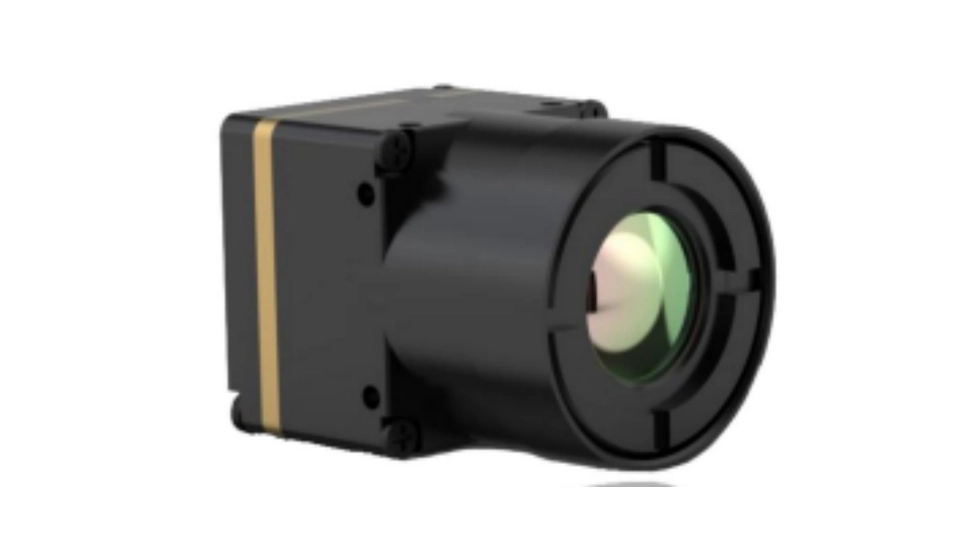
From urban operations to border surveillance and vehicle-mounted platforms, flexibility is essential. The adaptability of light weight uncooled thermal sights makes them effective across multiple mission types:
Infantry and special forces: Improved maneuverability during night raids or reconnaissance
Law enforcement: Reliable thermal detection for search missions or surveillance
Vehicle and turret systems: Low-maintenance integration for long-duration operations
UAV/UGV platforms: Reduced payload weight for extended flight or driving time
CNGEIR’s product development focuses on modularity—allowing sights to integrate with helmets, rifles, remote weapon stations, and observation devices. This flexibility ensures that a single thermal solution can support a wide range of deployment needs.
Budget efficiency is an increasing priority for government agencies and defense organizations. Cooled sights often involve high acquisition and maintenance expenses due to complex cooling engines and precision manufacturing demands.
In contrast, light weight uncooled thermal sights offer:
Affordable acquisition cost
Lower lifecycle maintenance
Reduced failure rate
Lower total cost of ownership
For units that require large-scale deployment or frequent field replacement, uncooled systems represent a more sustainable strategy.
At CNGEIR, the engineering process is guided by practical feedback from tactical users and continuous optical innovation. Our product line focuses on:
Compact mechanical structures
High-sensitivity uncooled sensors
Athermalized optical pathways for stable imaging
Rugged housings designed for real combat conditions
Precise alignment for weapon-mounted stability
By integrating these design principles, CNGEIR aims to ensure that our light weight uncooled thermal sights deliver dependable performance in scenarios where reaction time and clarity determine mission outcomes.
The global shift toward light weight uncooled thermal sights is driven by a fundamental truth: modern missions demand mobility, reliability, endurance, and real-time adaptability. As tactical environments become more complex and unpredictable, lightweight uncooled systems offer a practical balance of performance and durability that aligns with the needs of today’s operators.
With ongoing advancements in sensor technology and optical design, uncooled thermal sights are poised to remain the preferred choice for military, law enforcement, and security professionals. CNGEIR will continue to support this evolution through high-quality, mission-ready thermal imaging solutions that enhance operator confidence and operational success.
 Call us on:
  Email Us:
  No.9 Zhongxing East Road, Lishui Economic Development Zone, Nanjing, Jiangsu, China
  en
en