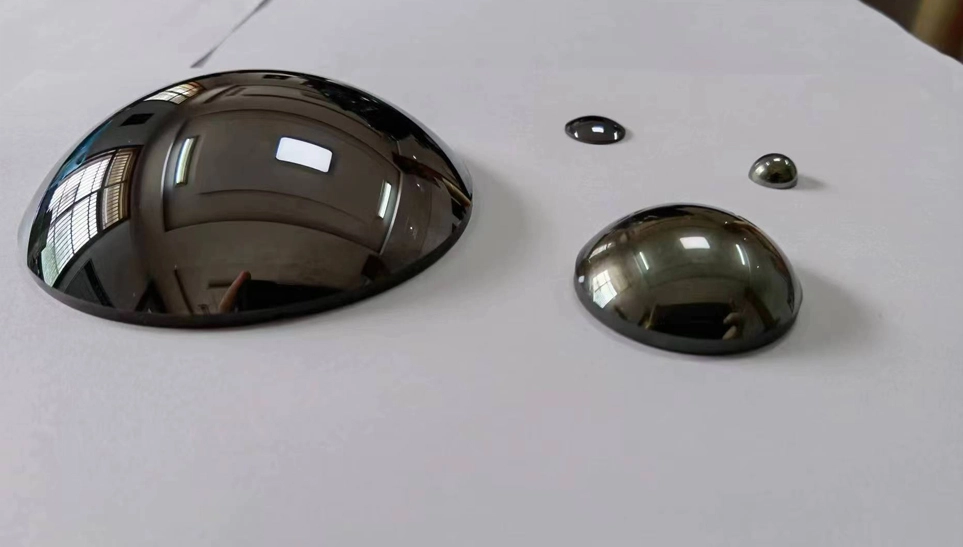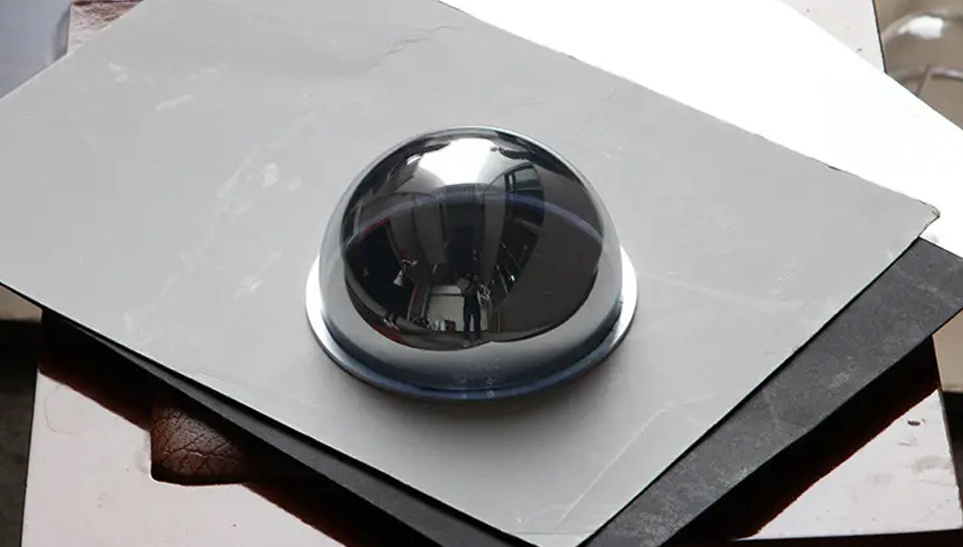
Chalcogenide lenses are a type of lens material specifically used for infrared optical systems, made from chalcogenide glass. This material is typically composed of elements such as sulfur, selenium, and tellurium, and is designed for optical transmission in the infrared spectrum.
Unlike visible light optical glass, chalcogenide glass efficiently transmits infrared wavelengths, making it widely used in thermal imaging, night vision, gas detection, and industrial infrared detection systems.
In recent years, with the rapid growth in demand for infrared imaging, chalcogenide lenses have become one of the important optical materials replacing germanium and zinc selenide.
Chalcogenide lenses are infrared optical components made from amorphous chalcogenide glass, capable of covering approximately 0.5 μm to 12–16 μm of the infrared spectrum.
Its main characteristics include:
High infrared transmittance
Low optical dispersion
Suitable for precision molded shaping
Capable of aspherical design
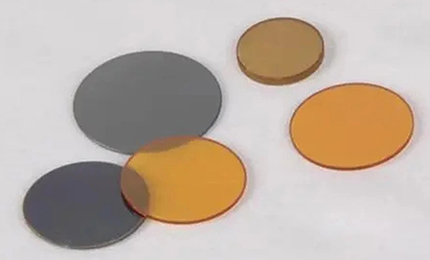
According to CNGEIR's infrared optical material data, chalcogenide glass round infrared blanks and lenses are widely used in thermal imaging systems due to their high transmittance and high processing accuracy.
| Performance | Chalcogenide Lens | Germanium Lens | ZnSe Lens |
|---|---|---|---|
| Infrared Range | MWIR–LWIR | Excellent LWIR | Good MWIR |
| Density | Low–Medium | High | Medium |
| Cost | Moderate | High | High |
| Machinability | Excellent (Suitable for molding) | Mainly machined | Moderate |
| Thermal Stability | Good | Excellent | Good |
| Weight | Light | Heavy | Medium |
Germanium Lens: Strong performance but high cost
ZnSe: Good transmittance but relatively soft
Chalcogenide Lens: Best overall, suitable for mass production
The biggest advantage of chalcogenide glass is its ability to achieve high precision molded mass production, significantly reducing manufacturing costs.
Covers both mid-wave and long-wave infrared, making it a core material for thermal imaging systems.
Supports glass molded shaping, suitable for industrial mass production.
Can be used for aspherical, freeform, and miniature optical structure design.
Helps realize smaller, lighter optical systems.
Covers military, automotive, industrial inspection, medical, and other fields.
1. Is a chalcogenide lens better than a germanium lens?
Chalcogenide lenses are more suitable for low-cost, scalable infrared systems, while germanium lenses perform better in high-end long-wave infrared (LWIR) extreme applications. The specific choice depends on the balance between performance needs and cost.
2. Which industries most commonly use chalcogenide lenses?
Primarily used in thermal imaging, military, automotive ADAS, industrial inspection, and infrared sensing systems, these fields all require reliable infrared light transmission capabilities.
3. Can chalcogenide glass be used for mass production optics?
Yes. Chalcogenide glass is very suitable for precision molded shaping processes, enabling the mass production of infrared optical components at low cost.
Chalcogenide lenses represent one of the most important technological advances in the modern infrared optics field. With excellent infrared transmission performance, cost-effective manufacturing capabilities, and good compatibility with precision molded shaping processes, they bridge the gap between high-performance optical materials and scalable industrial production.
Compared to traditional materials such as germanium and zinc selenide, chalcogenide glass achieves a unique balance between performance, manufacturability, and cost, making it one of the core materials for next-generation infrared optical systems.
For high-end infrared optical components such as chalcogenide glass infrared round blanks and lenses, CNGEIR provides professional engineering solutions aimed at high precision optical applications.
 Call us on:
  Email Us:
  No.9 Zhongxing East Road, Lishui Economic Development Zone, Nanjing, Jiangsu, China
  en
en