Selecting the right sight system requires more than comparing magnification or objective lens diameter. The most important parameters are magnification, field of view, eye relief, exit pupil, image quality, light transmission, reticle design, parallax control, and environmental stability.
These parameters interact with each other. Higher magnification, for example, normally reduces field of view, while a larger objective lens does not automatically guarantee a brighter or better image. For professional optical sights, system-level balance matters more than maximizing any single specification.
The correct magnification depends on the required observation distance and field of view.
Low magnification provides a wider viewing area and generally makes target acquisition easier. Higher magnification reveals more target detail at distance but narrows the field of view and makes small movements more noticeable.
For this reason, buyers should determine the required operating range before specifying magnification. A system designed for wide-area observation should not be optimized in the same way as one intended for detailed viewing at longer distances.
Variable-magnification designs can provide greater flexibility, but optical quality must remain consistent throughout the zoom range.
Field of view (FOV) describes how much of the scene can be seen through the optic at a given distance. It is closely related to magnification: as magnification increases, FOV generally becomes narrower.
A wider FOV is valuable when fast visual acquisition, moving-object tracking, or situational awareness is important. A narrower FOV may be acceptable when the priority is observing finer detail at longer distances.
When evaluating optical sights, manufacturers and system integrators should therefore consider magnification and FOV together rather than treating them as independent specifications.
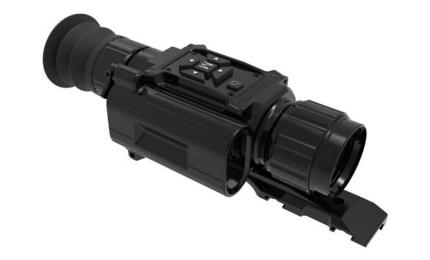
Eye relief is the distance between the eyepiece and the user's eye at which the full image remains visible.
Good eye relief contributes to:
comfortable viewing
stable eye positioning
full-field image visibility
reduced sensitivity to head-position changes
easier system integration
Longer eye relief can improve usability in certain systems, but optical design involves trade-offs between eye relief, magnification, and field of view.
For custom sight projects, eye relief should therefore be defined early rather than treated as a secondary mechanical parameter.
No. Objective diameter alone does not determine image brightness.
One important related parameter is exit pupil, which is the diameter of the light beam leaving the eyepiece. It is influenced by both objective diameter and magnification. Increasing magnification reduces exit-pupil diameter for a given objective size.
Actual visual performance also depends on factors including:
optical glass quality
lens coatings
transmission efficiency
internal reflections
aberration control
overall optical design
This is why two sight systems with similar objective diameters can deliver noticeably different image quality.
They are especially important when the sight must maintain image contrast under difficult lighting.
Each optical surface can introduce reflection losses. Properly designed coatings improve transmission and help control unwanted reflections, flare, and contrast reduction.
However, buyers should avoid evaluating a sight only by a claimed transmission percentage. Useful image quality depends on the entire optical chain, including lens materials, surface accuracy, coatings, mechanical alignment, and stray-light control.
CNGEIR's optical sight portfolio includes infrared, digital, and white-light sight systems, meaning optical requirements can vary significantly according to the spectral range and detector or viewing architecture.
A reticle should match the intended viewing system and magnification architecture.
Important factors include:
Reticle visibility: The aiming pattern should remain distinguishable without unnecessarily obscuring the observed scene.
Illumination: An illuminated reticle can improve visibility under low-light conditions. CNGEIR also highlights low-light visibility as an important advantage of illuminated optical sight systems.
Focal-plane position: In variable-power optics, first focal plane and second focal plane reticles behave differently. A first focal plane reticle changes apparent size with magnification, while a second focal plane reticle maintains approximately the same apparent size.
The correct design depends on how the sight will be used and how reticle subtensions are expected to function throughout the magnification range.
Parallax occurs when the apparent relationship between the reticle and observed image changes as the user's eye position changes.
This becomes increasingly important in precision-oriented or higher-magnification optical systems. Some sight systems therefore use adjustable objectives or side-focus mechanisms to bring the target and reticle into the appropriate optical relationship at the intended distance.
For OEM projects, acceptable parallax performance should be specified together with operating distance, magnification range, and eye-position requirements.
For custom optical sights, providing complete technical requirements early can significantly improve system matching.
Typical specifications should include:
required magnification or zoom range
field of view
objective aperture
eye relief
exit pupil requirements
operating spectral range
reticle type
focus and parallax requirements
overall size and weight limitations
environmental operating conditions
mechanical interface requirements
The intended technology also matters. CNGEIR currently categorizes its optical sight solutions into lightweight multifunction infrared sight scopes, digital gun scopes, and white-light optical sights, each of which requires a different optical and system architecture.
The best sight system is not necessarily the one with the highest magnification or largest objective lens. Effective optical sights balance magnification, field of view, eye relief, exit pupil, transmission, reticle performance, parallax control, and mechanical requirements.
For OEM and system-integration projects, these specifications should be evaluated together. Matching the optical architecture to the actual viewing distance, lighting conditions, spectral requirements, and platform constraints is the most reliable way to achieve consistent real-world performance.
Magnification, field of view, eye relief, exit pupil, transmission, reticle design, and parallax performance are among the most important parameters.
Not necessarily. Higher magnification provides more detail but generally reduces field of view and can make image movement more noticeable.
There is no universal value. The required FOV depends on magnification, viewing distance, and how much surrounding scene information must remain visible.
Proper eye relief allows the user to see the complete image comfortably and consistently.
Not by itself. Exit pupil, magnification, glass quality, coatings, and overall optical design also affect perceived image brightness.
 Call us on:
  Email Us:
  No.9 Zhongxing East Road, Lishui Economic Development Zone, Nanjing, Jiangsu, China
  en
en