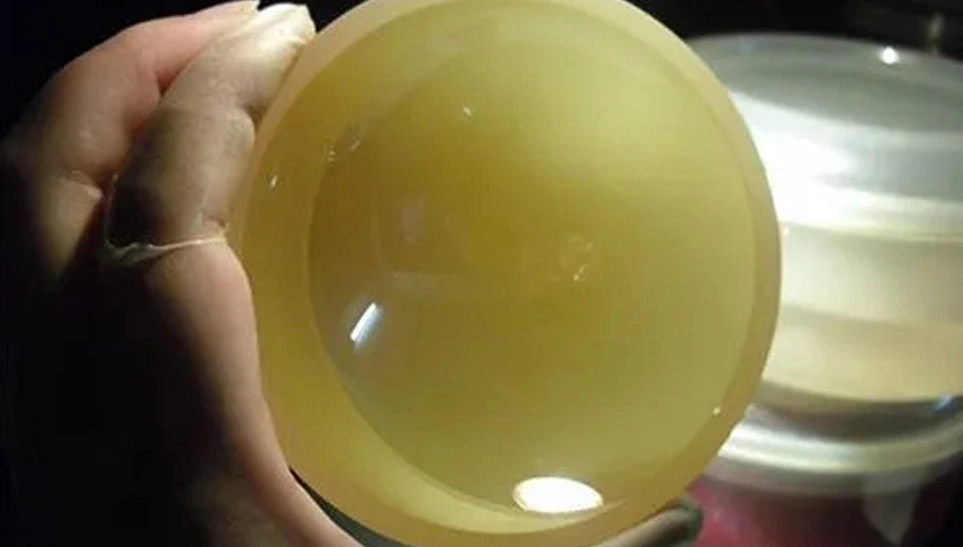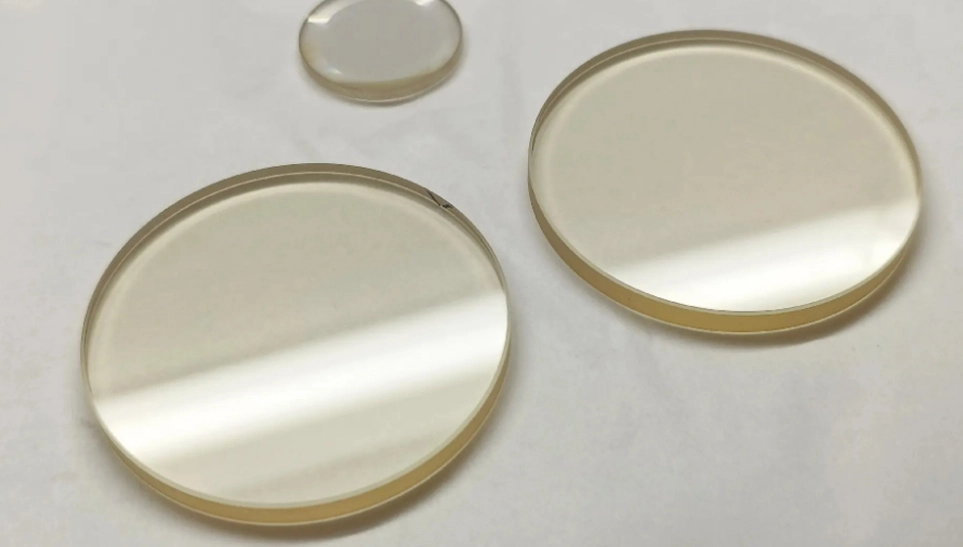
Optical domes are essential components in modern optical imaging systems because they protect sensitive lenses and sensors while maintaining high optical performance in demanding environments. By combining mechanical protection with excellent light transmission, optical domes enable cameras, infrared systems, and precision imaging devices to operate reliably in applications such as marine exploration, aerospace, defense, surveillance, and industrial inspection.
Unlike traditional flat protective windows, an optical dome provides a curved optical interface that minimizes distortion, preserves a wide field of view, and allows imaging systems to capture accurate data from multiple angles. Advanced materials such as sapphire, fused silica, and specialized optical glass dome designs further enhance durability, environmental resistance, and optical clarity.
An optical dome is used as a protective optical element installed in front of cameras, sensors, and imaging assemblies to shield internal components from harsh environmental conditions while allowing light or infrared radiation to pass through with minimal interference.
In modern imaging systems, optical domes serve several critical functions:
Environmental protection: Prevents damage caused by water, dust, pressure, salt spray, chemicals, and mechanical impact.
Optical performance preservation: Maintains image quality by reducing aberrations and unwanted reflections.
Wide-angle imaging support: Enables panoramic observation and large field-of-view applications.
System reliability improvement: Extends the service life of expensive optical sensors in extreme operating conditions.
For underwater cameras, unmanned vehicles, aircraft imaging systems, and security monitoring equipment, the optical dome is often the first protective barrier between the optical system and the external environment.
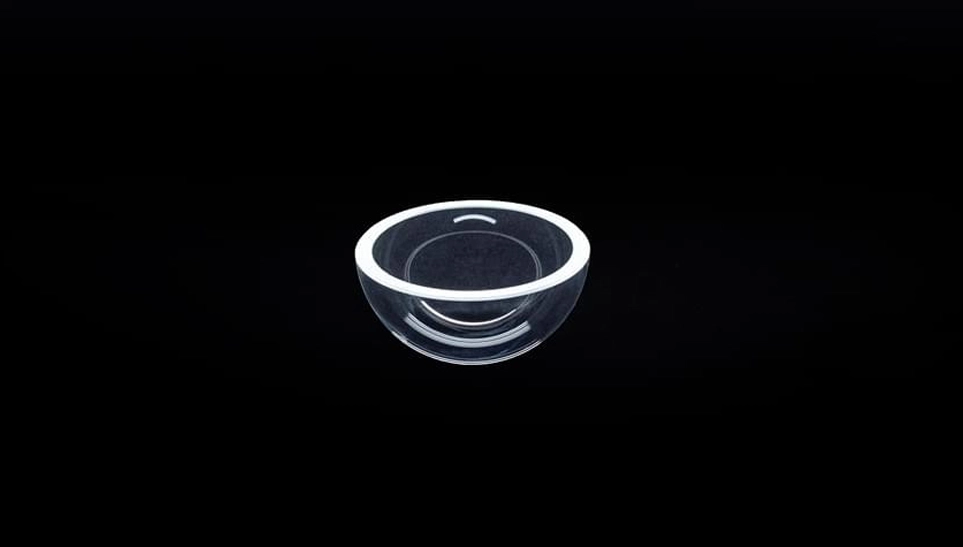
Optical domes provide advantages over flat windows because their curved geometry reduces optical distortion when viewing objects at different angles. A flat window can introduce refraction changes, image displacement, and reduced field performance, especially in underwater or high-pressure environments.
The hemispherical structure of optical domes allows incoming light rays to enter more naturally, reducing the deviation between the external scene and the captured image. This makes them particularly valuable for:
Underwater imaging systems
Wide-angle surveillance cameras
Aerospace optical sensors
Autonomous vehicles
Remote sensing equipment
In addition, the curved shape improves mechanical strength by distributing external pressure more evenly, making dome structures suitable for deep-sea and aerospace applications.
Optical domes improve imaging performance by maintaining optical alignment, reducing environmental interference, and supporting consistent light transmission.
High-quality dome designs are engineered with precise curvature, surface quality, and material selection to achieve:
A properly designed optical dome minimizes image deformation caused by refraction. This is especially important for systems that require accurate measurement, navigation, or target recognition.
Materials such as fused silica, sapphire, and optical-grade glass provide excellent transmission across different wavelength ranges. An optical glass dome can be optimized for visible imaging applications, while infrared-compatible dome materials support thermal imaging systems.
Optical domes protect sensitive optical assemblies from:
Water pressure
Sand and dust particles
Temperature variations
UV exposure
Mechanical impact
This protection allows imaging equipment to maintain stable operation in challenging environments.
Due to their combination of protection and optical precision, optical domes are used across multiple industries.
Underwater cameras and remotely operated vehicles rely on optical domes to withstand water pressure while maintaining clear imaging through changing underwater conditions.
Aircraft and spacecraft imaging systems require lightweight, durable optical protection. Optical domes help sensors operate under temperature fluctuations, radiation exposure, and aerodynamic conditions.
Wide-angle security cameras use dome structures to achieve broad viewing coverage while protecting internal optical components from weather and vandalism.
Weather observation systems, atmospheric sensors, and scientific monitoring devices use optical domes to ensure reliable data collection in outdoor environments.
High-speed imaging systems benefit from optical domes because they provide protection without compromising image clarity or response speed.
Selecting the right optical dome requires consideration of application requirements, optical specifications, and environmental conditions.
Important selection factors include:
The dome material must match the operating spectrum of the imaging system. Visible cameras typically use glass or fused silica, while infrared systems require specialized IR-transmitting materials.
Applications involving water, pressure, temperature changes, or abrasive environments require materials with appropriate mechanical strength and durability.
Key parameters include:
Transmission efficiency
Surface accuracy
Coating performance
Distortion control
For advanced imaging systems, customized dome solutions may be required to meet specific size, shape, coating, and optical performance requirements.
For modern optical imaging systems operating in demanding environments, optical domes are not simply protective covers—they are precision optical components that directly influence image quality, reliability, and system performance. Choosing the right optical dome design and material is essential for achieving accurate imaging results in marine, aerospace, infrared, and industrial applications.
 Call us on:
  Email Us:
  No.9 Zhongxing East Road, Lishui Economic Development Zone, Nanjing, Jiangsu, China
  en
en