Choosing a cooled thermal module for high-precision infrared imaging requires more than comparing detector resolution. The right module must balance spectral band, pixel pitch, NETD, cooling performance, frame rate, optical compatibility, calibration stability, interface configuration, and environmental capability. For demanding imaging systems, these parameters determine whether the module can resolve small temperature differences and maintain reliable image quality under changing conditions.
The first step is to define the imaging task rather than starting with a preferred detector format. A surveillance system observing distant objects, a scientific instrument measuring subtle thermal variations, and an airborne imaging payload may require very different module configurations.
Resolution is important, but it should be considered together with pixel pitch and lens characteristics. A 640 × 512 detector can provide an effective balance between image detail, system size, and processing requirements, while 1280 × 1024 configurations are more appropriate when finer spatial detail is required. However, higher resolution does not automatically produce a better image if the optical system cannot adequately utilize the detector's sampling capability.
Buyers should therefore establish several requirements before selecting a thermal camera module, including target size, observation distance, spectral band, required frame rate, temperature sensitivity, available space, and power budget.
The detector's spectral response must match the application and the optical path. Cooled modules are commonly used with mid-wave infrared (MWIR) or long-wave infrared (LWIR) detectors, depending on the target environment and imaging objective.
MWIR systems are particularly useful when atmospheric transmission, high-temperature targets, or long-range imaging performance is important. The 3–5 μm region can provide strong contrast for many thermal scenes and is widely considered for demanding applications requiring high sensitivity and rapid response.
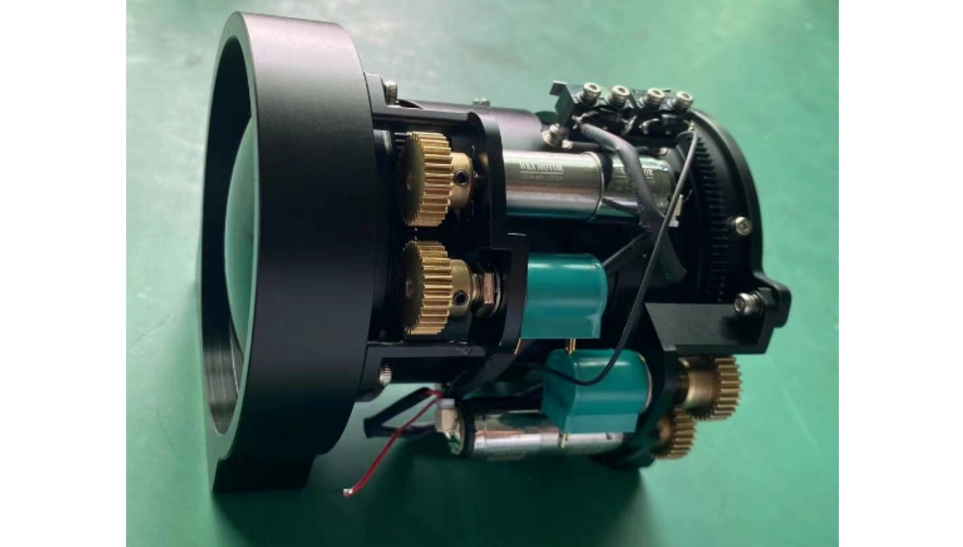
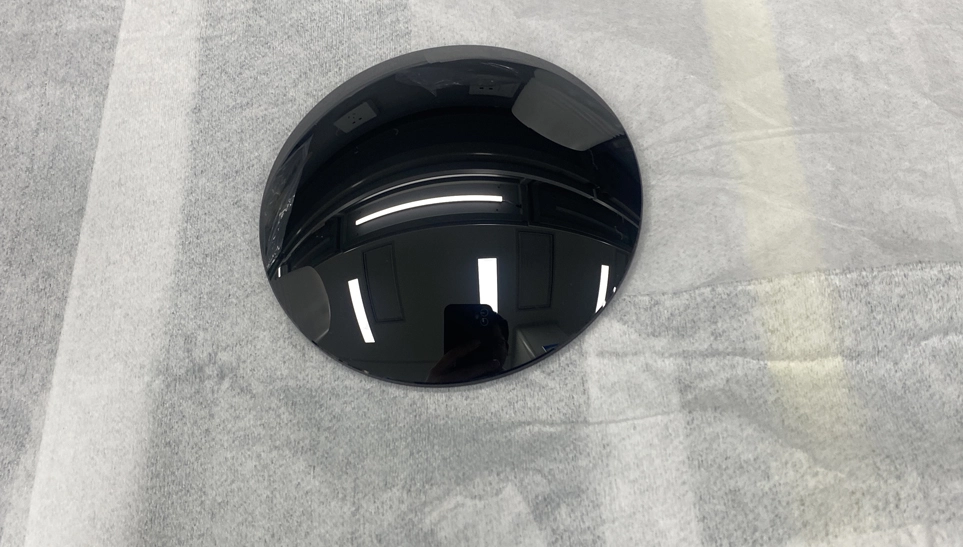
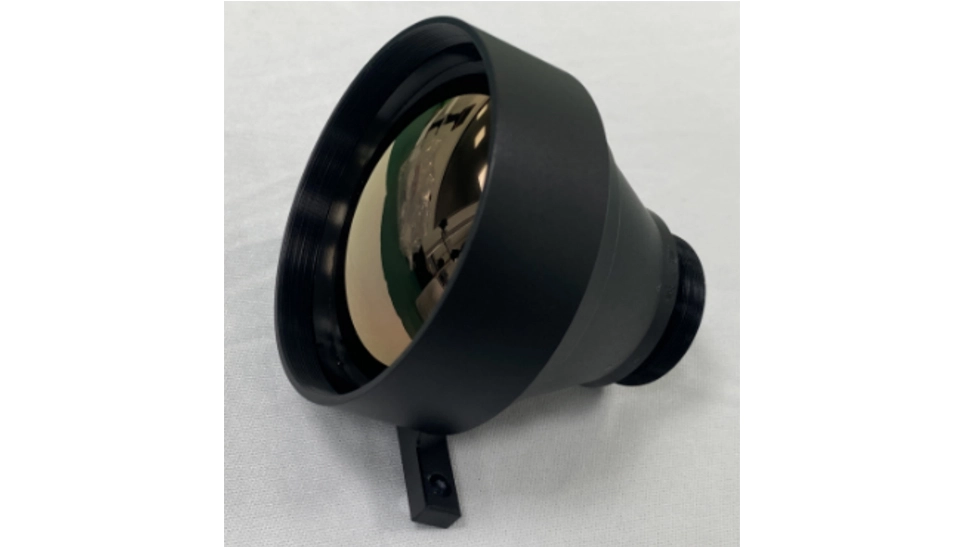
The optical materials and lens coatings must also be compatible with the detector's spectral range. A mismatch between detector and optics can limit the practical performance of an otherwise high-quality detector.
Noise equivalent temperature difference, or NETD, is one of the most useful indicators of thermal sensitivity. It describes the smallest temperature difference that the detector can distinguish under specified test conditions. A lower NETD generally means that the system can detect finer thermal variations.
For high-precision imaging, buyers should not evaluate NETD as an isolated number. Test temperature, integration conditions, frame rate, optics, calibration, and detector configuration can all influence practical results. A specification such as NETD ≤20 mK at a defined operating condition is meaningful only when the testing conditions are clearly understood.
This is particularly important for applications where the difference between adjacent thermal regions may be small. Better sensitivity can improve image contrast and help preserve useful information that might otherwise be lost in detector noise.
Cooling reduces the operating temperature of the infrared detector and suppresses thermal noise. This is a major reason cooled detectors are selected for high-performance imaging systems where sensitivity and image consistency are more important than minimum size or cost.
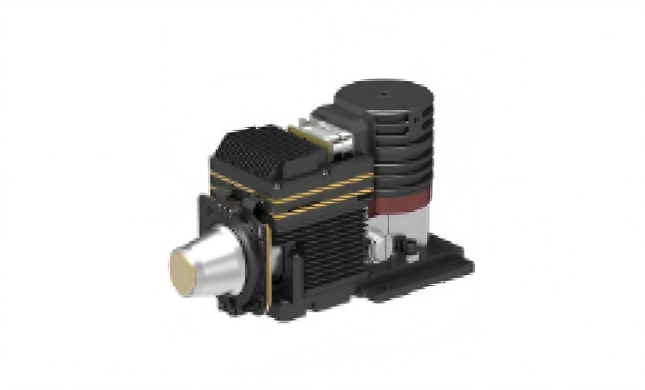
A cooled thermal camera module typically integrates the detector, cooling mechanism, electronics, and signal-processing components into a compact imaging assembly. Stirling cooling is one common approach because it can provide the low detector temperature required for high sensitivity while supporting continuous operation.
Cooling time is another practical parameter. If a module requires several minutes to reach its specified operating condition, system designers need to account for this during startup and mission planning. A short and repeatable cool-down period can simplify system integration and improve operational predictability.
Pixel pitch describes the physical spacing between detector pixels. Smaller pixels can increase spatial sampling density and help reduce the physical size of the focal plane, but their benefits depend strongly on the optical design.
For example, a 12 μm pixel detector and a 15 μm pixel detector may produce different system-level results even when their nominal resolutions appear similar. Lens focal length, aperture, modulation transfer function, diffraction, and detector sensitivity all influence the final image.
The best approach is to evaluate detector and optics as one system. A high-resolution detector paired with an unsuitable lens may provide less practical detail than expected.
Frame rate should be selected according to target movement and image-processing requirements. Static scientific imaging may tolerate a lower frame rate, while airborne observation, dynamic industrial processes, and fast-changing scenes may benefit from 50 Hz or 100 Hz operation.
Higher frame rates can improve temporal resolution, but they may also increase processing bandwidth and system power requirements. Buyers should therefore consider the complete signal chain, including data interface, processor capability, storage, and display requirements.
Detector performance is not determined only by raw sensitivity. Pixel-to-pixel response differences can create fixed-pattern artifacts and reduce image uniformity. Effective calibration is therefore essential for precision infrared imaging.
A module specification stating an inhomogeneity value after calibration provides useful information about the consistency of the imaging array. For applications involving quantitative analysis or subtle thermal differences, calibration stability can be just as important as nominal detector resolution.
High-precision modules are often integrated into equipment exposed to temperature changes, vibration, humidity, or demanding field conditions. Operating temperature specifications should therefore be checked before final selection.
For example, modules designed to operate across a range such as -40°C to +60°C provide greater integration flexibility than devices intended only for controlled laboratory environments. Mechanical mounting, connector configuration, communication protocols, power consumption, and enclosure design should also be reviewed during system integration.
Uncooled modules are generally simpler, more compact, and easier to integrate because they do not require a mechanical cryogenic cooler. They can be highly effective for many general-purpose thermal imaging applications.
However, when the application requires very high sensitivity, low thermal noise, or demanding MWIR performance, cooling can provide a significant advantage. An uncooled thermal module may therefore be the better option when low power consumption, compactness, and fast startup take priority, while a cooled configuration is more suitable when image sensitivity and precision dominate the specification.
Beyond a standard datasheet, buyers should request complete information about detector type, spectral response, pixel pitch, NETD test conditions, cooling time, frame rate, calibration performance, power requirements, communication interfaces, operating temperature, mechanical dimensions, and integration documentation.
It is also useful to clarify whether the quoted performance applies to the detector alone or to the complete module. System-level specifications provide a much better basis for comparing suppliers because they reveal how the detector, electronics, cooling system, and calibration process perform together.
The best cooled thermal module is not necessarily the one with the highest detector resolution or lowest NETD on paper. It is the configuration whose detector, cooling system, optics, electronics, calibration, and environmental specifications collectively match the imaging task.
For high-precision infrared imaging, buyers should evaluate sensitivity, spectral compatibility, spatial resolution, frame rate, cooling behavior, calibration stability, and integration requirements as a complete system. This approach reduces the risk of selecting a technically impressive module that does not deliver the expected performance after integration.
 Call us on:
  Email Us:
  No.9 Zhongxing East Road, Lishui Economic Development Zone, Nanjing, Jiangsu, China
  en
en