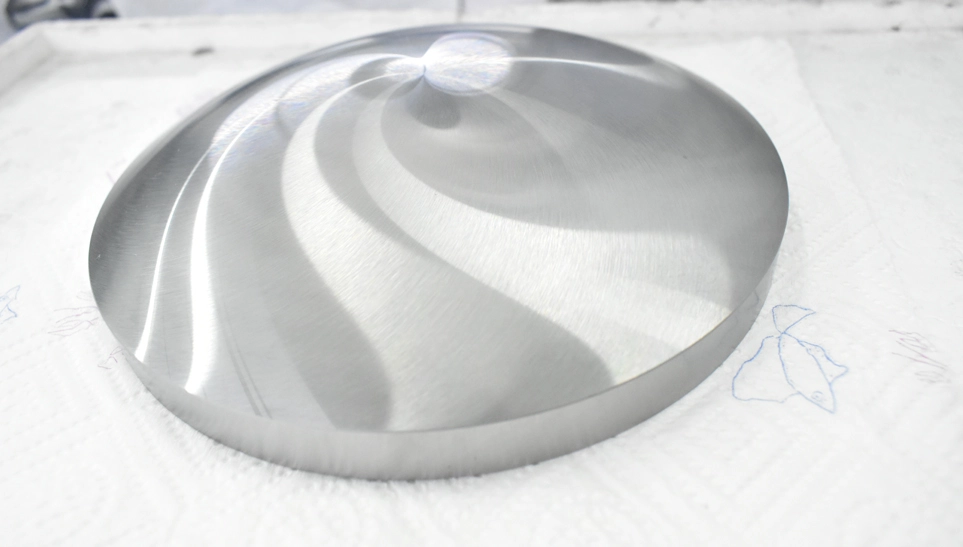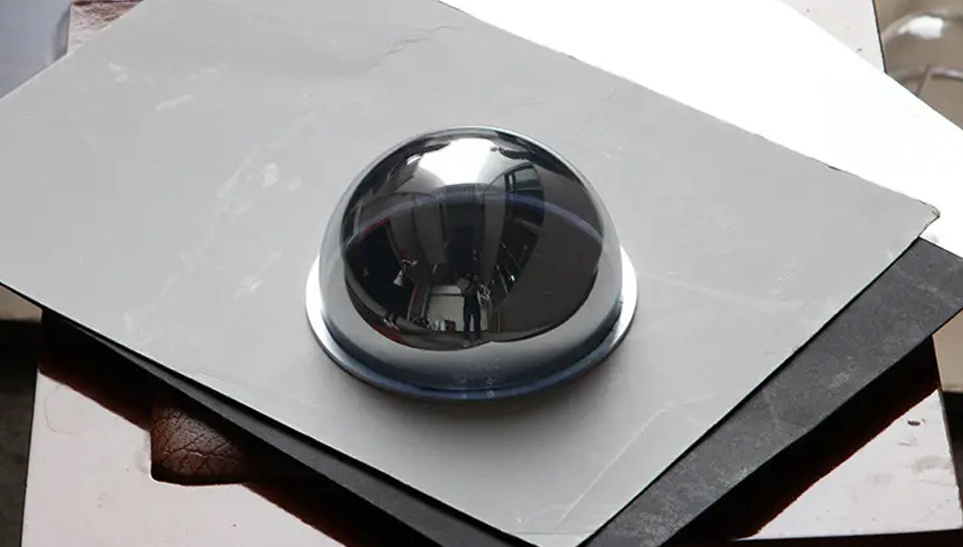
The optical performance of night vision headgear is determined by the combined performance of the objective lens, image intensifier or sensor, eyepiece, field of view, optical alignment, and light transmission. A high-quality image intensifier alone cannot guarantee a clear image if the optical system introduces excessive distortion, limits light transmission, or fails to maintain alignment during head movement.
The objective lens is the first major optical component in a night vision system. It gathers available light and focuses it onto the image intensifier or sensor. Its aperture, focal length, optical transmission, and aberration correction directly influence the amount and quality of information reaching the imaging core.
A larger aperture can collect more available light, which may improve image brightness under low-light conditions. However, increasing aperture can also increase optical size and weight. Head-mounted equipment therefore requires a careful balance between optical performance and ergonomics.
Night vision systems operate with much less available light than conventional daytime optical equipment. Every loss within the optical path can reduce the amount of usable light reaching the imaging core.
Lens coatings, substrate selection, optical surface quality, and lens design all affect transmission. High-transmission optics can help preserve available photons and improve the practical performance of the system, particularly in very low-light environments.
For buyers comparing head mounted night vision goggles, optical transmission should therefore be considered alongside image intensifier generation and nominal resolution.
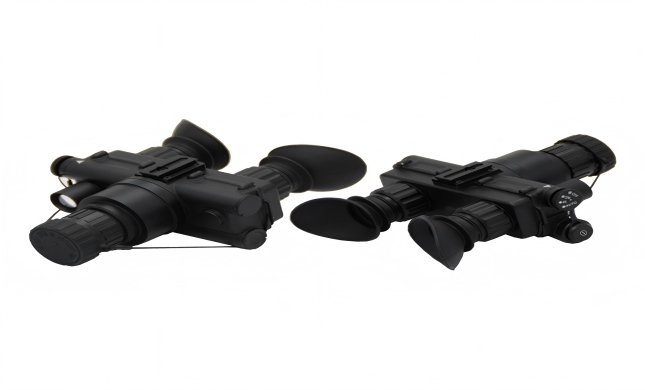
Field of view determines how much of the surrounding scene can be observed through the optical system. A wider field of view provides greater situational awareness, while a narrower field can support greater apparent magnification and concentration on a smaller area.
For head-mounted applications, field of view is especially important because users naturally move their heads to scan the environment. A practical design must provide enough coverage without introducing excessive distortion near the edge of the image.
Optical designers therefore need to balance field of view, focal length, lens diameter, distortion, and image quality rather than maximizing one parameter.
Optical distortion changes the geometric relationship between objects and their positions in the image. Barrel distortion, pincushion distortion, and other forms of aberration can become noticeable when users move their heads or compare the night vision image with their natural visual surroundings.
Well-corrected optics can provide a more natural image and reduce visual discomfort. This is particularly valuable for head-mounted equipment because the optical system is directly connected to the user's perception of movement and spatial relationships.
Alignment between the objective lens, imaging core, and eyepiece must remain stable. Even small alignment errors can affect image sharpness, field position, or binocular consistency.
Mechanical stability is therefore an optical quality issue, not simply a housing consideration. Head-mounted equipment experiences repeated movement, adjustment, and mounting changes, so the optical assembly must retain its designed geometry throughout normal use.
The eyepiece converts the intermediate image into an image that can be comfortably viewed by the user. Eye relief, magnification, field of view, distortion, and edge performance all contribute to viewing quality.
For head-mounted systems, sufficient eye relief is especially important because the device must remain comfortable when positioned in front of the user's eyes. An optical design that performs well on a laboratory bench may be less effective if the eyepiece is difficult to position consistently.
The image intensifier is the core component responsible for amplifying extremely low levels of available light in many traditional night vision systems. Its sensitivity, gain behavior, resolution, signal-to-noise characteristics, and response to bright light all affect the final image.
However, the intensifier should not be evaluated separately from the optics. The objective lens must deliver sufficient light, while the eyepiece must efficiently present the amplified image to the user.
For buyers evaluating a night vision monocular with head mount, the optical chain should therefore be considered as a complete system.
Optical materials determine transmission characteristics, refractive properties, weight, durability, and environmental stability. Material selection depends on the wavelength range and the intended optical design.
Infrared applications may use materials that differ from those commonly found in visible-light optics. A germanium glass lens, for example, is associated with infrared optical applications because germanium transmits relevant infrared wavelengths.
For night vision headgear specifically, designers must select materials according to whether the optical system is based primarily on visible/near-infrared light amplification or incorporates additional infrared imaging functions.
Low-light conditions are not always uniform. A night scene can suddenly contain a much brighter source, causing a large change in illumination. Optical and electronic protection mechanisms can help maintain a usable image and reduce the effect of sudden brightness changes.
For head-mounted equipment, this is particularly important because users may move between different lighting conditions without manually adjusting the system. Automatic control can improve consistency and reduce the need for frequent intervention.
Rather than relying on a single resolution figure, buyers should evaluate objective aperture, optical transmission, focal length, field of view, distortion, edge sharpness, eye relief, optical alignment, and image uniformity.
These factors should also be assessed under realistic lighting conditions. Laboratory specifications provide useful benchmarks, but practical viewing quality depends on how the optical system interacts with the image intensifier, housing, mounting mechanism, and user's eye position.
The optical performance of night vision headgear is a system-level result. Objective lens quality determines how efficiently available light is collected, the imaging core determines how that information is amplified or detected, and the eyepiece determines how effectively the resulting image is presented.
For buyers and product developers, the most reliable evaluation method is to examine the complete optical path rather than selecting equipment based on one headline specification. Transmission, field of view, distortion, alignment, materials, and ergonomic viewing characteristics all contribute to the final quality of a head-mounted night vision system.
 Call us on:
  Email Us:
  No.9 Zhongxing East Road, Lishui Economic Development Zone, Nanjing, Jiangsu, China
  en
en