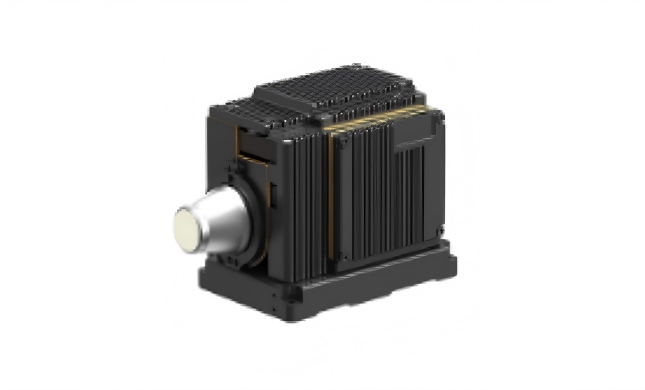
Cooled thermal modules improve aerospace infrared imaging primarily by reducing detector noise and increasing sensitivity to subtle temperature differences. In airborne and space-related imaging systems, this advantage becomes especially valuable when targets are distant, atmospheric conditions are variable, or the imaging system must extract small thermal signals from a complex background.
Aerospace imaging systems often operate at long observation distances and under rapidly changing environmental conditions. A target may occupy only a small portion of the field of view, while clouds, atmospheric absorption, terrain, or other thermal sources introduce background variation.
Under these conditions, the detector must preserve weak thermal information without allowing detector noise to overwhelm the signal. Cooling the detector reduces its thermal noise and allows the imaging system to achieve a lower noise equivalent temperature difference.
This makes cooled systems particularly useful when the imaging requirement involves small temperature differences rather than simply identifying whether an object is hot or cold.
Infrared detectors generate noise as a result of their operating temperature and electronic characteristics. As detector temperature decreases, certain noise components can be significantly reduced. The resulting improvement in signal-to-noise performance allows the system to distinguish weaker infrared signals.
For aerospace imaging, this can translate into better contrast in scenes containing low-temperature differences, more consistent detection performance, and improved image quality at longer observation distances.
However, cooling is only one part of the system. Detector characteristics, optics, electronics, image processing, stabilization, and calibration must work together to achieve the expected result.
The mid-wave infrared region offers characteristics that can be advantageous for long-range and high-performance thermal imaging. Its atmospheric transmission behavior and strong response to many thermal sources make it an important spectral range for sophisticated infrared systems.
In a cooled system, mwir detectors can operate at temperatures that significantly reduce detector noise. This combination of spectral selection and cooling is one reason MWIR cooled imaging systems are widely considered when high sensitivity and detailed thermal information are required.
The choice between MWIR and other infrared bands should nevertheless be based on the actual operating environment, target characteristics, atmospheric conditions, and optical design rather than on spectral band alone.
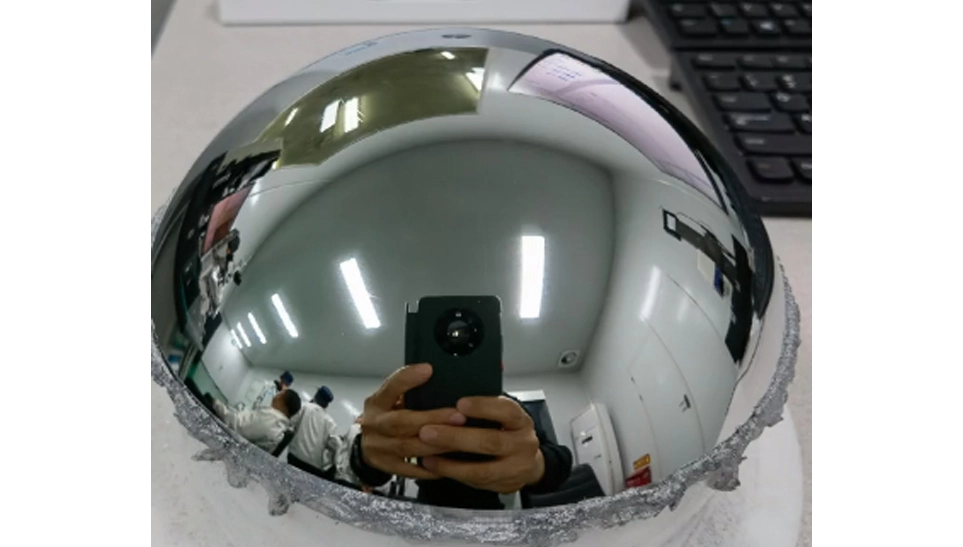
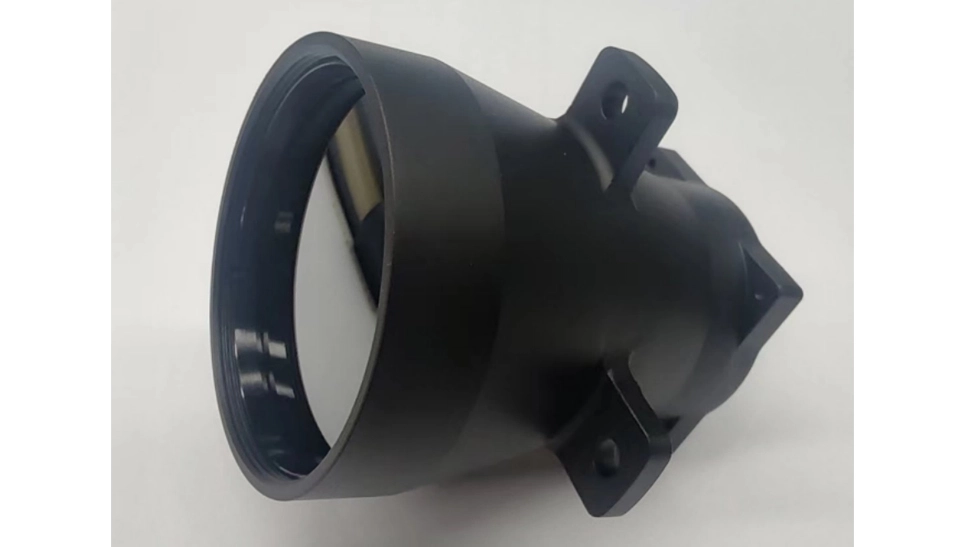
A highly sensitive detector cannot compensate for an inefficient optical system. The lens must transmit the relevant infrared wavelengths while maintaining sufficient optical resolution across the detector's field of view.
Optical aperture is particularly important because it influences how much infrared radiation reaches the detector. A larger effective aperture can improve the amount of collected energy, although it also affects lens size, weight, manufacturing complexity, and system cost.
Optical transmission, aberration correction, focal length, modulation transfer function, and thermal stability should therefore be evaluated alongside detector specifications.
Focal length affects field of view and the apparent size of distant objects on the detector. Longer focal lengths provide narrower fields of view and can be useful when detailed observation of distant targets is required.
A 200mm camera lens, for example, represents a substantially different optical configuration from a short-focal-length lens. Its practical suitability depends on detector format, pixel pitch, required field of view, aperture, and the distance to the subject.
For aerospace systems, focal length should be selected from the complete optical requirement rather than treated as an independent specification. The lens and detector need to be matched so that the system can take full advantage of the detector's spatial sampling capability.
Detection performance depends on the amount of useful infrared radiation delivered to the detector and how effectively the system resolves the target against its background. Lens transmission, aperture, focal length, optical quality, and atmospheric conditions all contribute to this relationship.
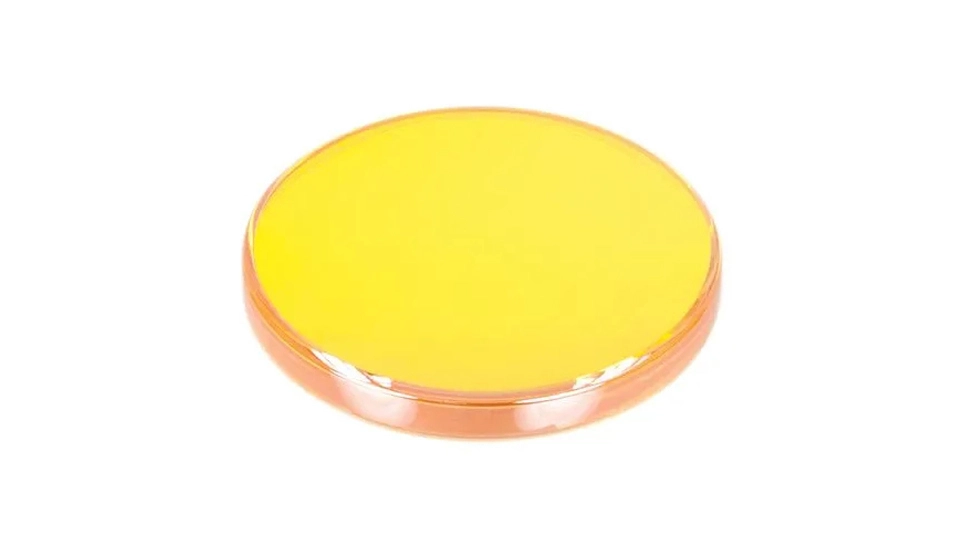
The choice of infrared lens material is also important because conventional visible-light optical materials are not necessarily suitable for infrared wavelengths. Materials such as germanium and other infrared-transmitting substrates may be selected according to the spectral range and performance requirements.
For aerospace integration, designers must additionally consider optical weight, mechanical stability, thermal expansion, environmental resistance, and alignment retention.
Airborne systems can experience large changes in ambient temperature during operation. These temperature variations can affect detector response, optical alignment, electronics, and mechanical components.
Calibration helps compensate for detector non-uniformity and other system-level variations. Without effective calibration, a highly sensitive cooled detector may still produce artifacts or inconsistent image quality.
Stable calibration is particularly valuable when the imaging system is expected to operate over a broad environmental range. Designers should examine both initial calibration performance and the manufacturer's approach to maintaining image uniformity during operation.
Yes. Cooling time affects how quickly an imaging payload reaches its specified performance after startup.
A module with a relatively short and repeatable cooling period can simplify system operation, especially when the payload has limited preparation time. Cooling time should be evaluated together with power consumption, operating temperature, cooler lifetime, vibration, and mechanical integration.
Stirling cooling is commonly considered for compact cooled infrared systems because it provides active detector cooling without requiring a large external cooling architecture. The practical choice still depends on the required detector temperature and system design.
Thermal detection is not simply a matter of producing a high-quality individual frame. Aerospace systems often need to capture changing scenes and transfer large amounts of image data to onboard processing electronics.
Frame rates such as 25 Hz, 50 Hz, or 100 Hz may be selected according to the application's temporal requirements. Higher frame rates can provide smoother representation of dynamic scenes but require greater data throughput and processing capability.
Communication interfaces should therefore be evaluated early in the integration process. Electrical compatibility, data bandwidth, synchronization, control commands, and connector configuration can all affect system development time.
Temperature range is only one consideration. Aerospace imaging equipment may also be subjected to vibration, mechanical shock, pressure changes, electromagnetic interference, and repeated thermal cycling.
Although the thermal module itself may have a defined operating temperature range, the complete imaging assembly must be designed so that the detector, cooler, optics, electronics, and mechanical structure remain aligned and functional under expected conditions.
A suitable module should combine high sensitivity with predictable cooling behavior, stable calibration, appropriate detector resolution, compatible spectral response, practical power consumption, and robust interfaces.
System designers should also consider the module's dimensions and weight. A detector offering excellent laboratory performance may not be the best choice if its power, cooling, or mechanical requirements conflict with the payload architecture.
Cooled thermal modules provide aerospace imaging systems with a valuable combination of high sensitivity and detailed infrared information. Their greatest advantage comes from reducing detector noise, but real-world performance depends on the entire imaging chain.
The most effective selection process evaluates the cooled detector, MWIR or other spectral band, infrared optics, focal length, aperture, calibration, frame rate, interfaces, environmental specifications, and mechanical integration together. This system-level approach gives aerospace designers a more realistic basis for predicting thermal detection performance.
 Call us on:
  Email Us:
  No.9 Zhongxing East Road, Lishui Economic Development Zone, Nanjing, Jiangsu, China
  en
en